


In this lounge space designed for evenings that linger, designer Michael Abrams used Cambria Blackbrook™ on the moody bar top.
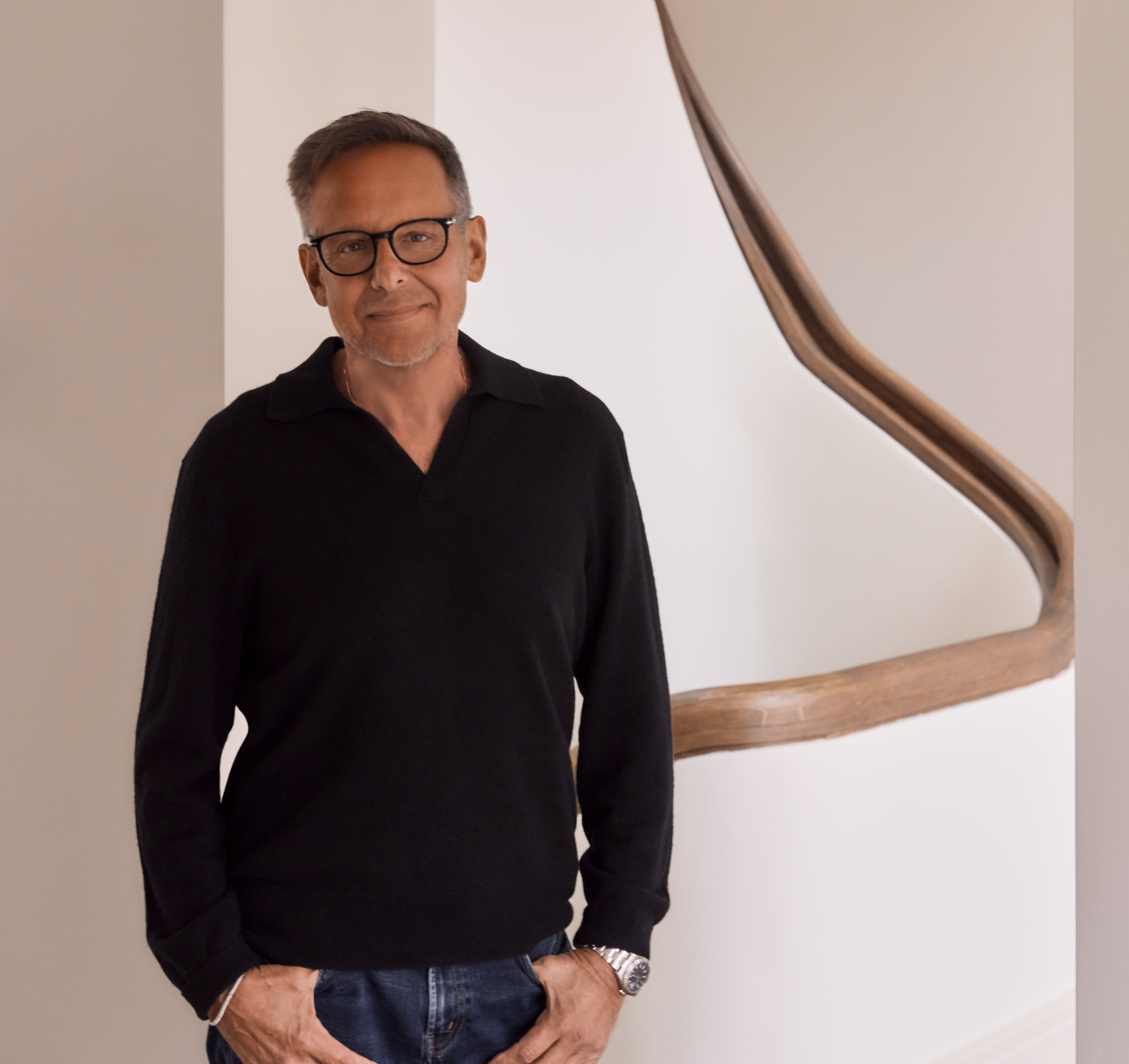
We recently spoke to Cambria Style featured designer Michael Abrams of Abrams Valenti Design about how he brought a night-on-the-town vibe to a home’s karaoke lounge—you read that right. And as our conversation continued, Abrams offered advice on setting the right mood to entertain, making smart decisions about quartz, and how man-made takes on Mother Nature’s bounty have come a long way.
Setting the Mood for Home Entertainment
Cambria Style: Let’s start with an overview—what were you trying to provide the homeowner here?
Michael Abrams: The space is on the penthouse level of the home, and it has a large, east-facing terrace. It was an oddly shaped space as well—utilized by the previous owner as a combination playroom for their kids and a bonus area right off of their outdoor space. When they purchased the home and we were going through, it was like, “Well, what do we make this space? How do we utilize this?” Is it a teenage hangout space? Is it a TV room? They got inspired by visiting a Japanese whiskey bar in Chicago, and they came back and said, “We want a place where we can entertain our friends. We’re really into karaoke, and so we kind of want a lounge space.” These people aren’t big drinkers, but they did want a place where they could have karaoke and hang out as a family or have some family friends over.
Would you highlight a choice that helped set the mood in the space?
One thing that I think was important was to add decorative lighting where possible. We didn’t add any to the ceiling. We did hang some pendants, and we added sconces and indirect LED lighting in the millwork. But it’s really nice to incorporate decorative fixtures. So often we see nothing but recessed lighting. It’s nice to have those multiple layers, and I think we accomplished that as well in this room.

Cambria design shown: Blackbrook
Counting on Cambria
When it came to the surface of the bar, what did you want to complement this palette of colors and textures?
We wanted it to be elegant and timeless, and we didn’t want it to compete with the slatted back wall. The focal point is the glass shelves with the various whiskeys, the slatted wood panels, and the sconces in front. So, when selecting the countertop, which was a large expanse, we wanted something that would not detract, but complement. And I think it did. [The Cambria Blackbrook design] is not busy. It’s got a natural pattern to it.
Were there any special ways you used Cambria?
It is an eased edge, and there’s actually an integral sink out of the same Cambria material. Part of our design was we wanted to minimize the eye bouncing around. Hence, we didn’t want the sink to be stainless steel or brass. We wanted it to disappear, and so we used the counter material.
And you made interesting use of Cambria in the foyer of this home as well?
Yes. Instead of using a traditional marble floor, we wanted to bring in a larger format, which is somewhat prohibitive in natural stone for flooring. And we utilized Cambria’s Everleigh™ on the foyer floor. It was the first time I’ve ever used the product for flooring, and, loved it. I absolutely loved it. It was great. It’s obviously quite durable. And you get that large format, which you don’t typically get [in other materials]. We maximized them as much as we could, so that it did have that monolithic slab appearance.


Cambria design shown: Everleigh
Making Decisions About Quartz
When you’re looking at design options for quartz, do you just see what a client responds to or help guide them to the right decision?
Well, of course, I take them to the right decision. That’s without question. This particular client was, first of all, not familiar with quartz; second of all, would never have thought of it for a floor. Showing imagery is so helpful—to see how it looks installed in someone’s home. That’s invaluable and helps sell the idea.
What qualities might make a quartz selection appealing to you?
I tend to like matte or satin. I’m not a high gloss type of designer, although there are moments where it works. And sometimes you mix two finishes—a leathered finish with a gloss—just like you do with paint: a flat with a sheen in the same color. But I love texture. I don’t mind a little bit of depth or movement. I think it feels more natural than a completely smooth material. So a little texture is something that I’ve always enjoyed, whether it’s natural stone or quartz … And I love when you’re like, “Is this a natural stone, or is this quartz?”
Talk to Your Designer
What’s your best advice to clients embarking upon a new project with a designer?
The key to a successful project is a client who is willing to participate on a significant level. It’s their home. I can do whatever, but I want to reflect your lifestyle and what you’re happy and comfortable living in. So be participatory—and this client was.
Is there a design detail you feel people consistently overlook or try to make decisions about too late in the process?
Lighting is one that comes up very early on, and you want to make sure you get that right. I think there’s so much that we can do today with lighting that was not possible 5, 10, 15 years ago. The advancements in technology with LED have afforded some incredible opportunities to play with light that we couldn’t do a decade ago. And I think that’s something that is important in the very beginning.
Don’t Forget These Key Design Ingredients
What are some key ingredients to shaping a space where people feel comfortable to talk, sing, and entertain?
Multiple seating areas when possible—to give people a chance to move around and interact. In addition to the whiskey bar, the seating had to be very functional for different occasions. And I think in entertaining spaces, it’s always wonderful to have natural light. That makes a significant difference. And this room had some expansive windows—with the skylight, being on the top floor—so I think that made it a very inviting space.
Do you value nostalgia and tradition in design?
I think nostalgia and tradition are very important. It’s what makes people comfortable, and being comfortable in one’s home, to me, is paramount. There’s nothing more important than that. Now, I’m biased because of what I do, but that’s how I feel. And so I don’t mind drawing from inspirations, whether it’s different periods or it’s the vibe/mood/feeling that they were looking for.
Discover More
Get our beautifully curated collection of lifestyle stories, interior design trends, and expert advice sent straight to your home and email inbox with a complimentary subscription to Cambria Style magazine.
Ready to explore Cambria quartz designs in person? Contact a Cambria consultant or use our retail locator to find a professional in your area for project support and planning, material selection, or visualizing what’s possible.
Explore the #MyCambria Gallery to see how others transformed their spaces and follow us on social media.


