


Cambria design shown: Colton®
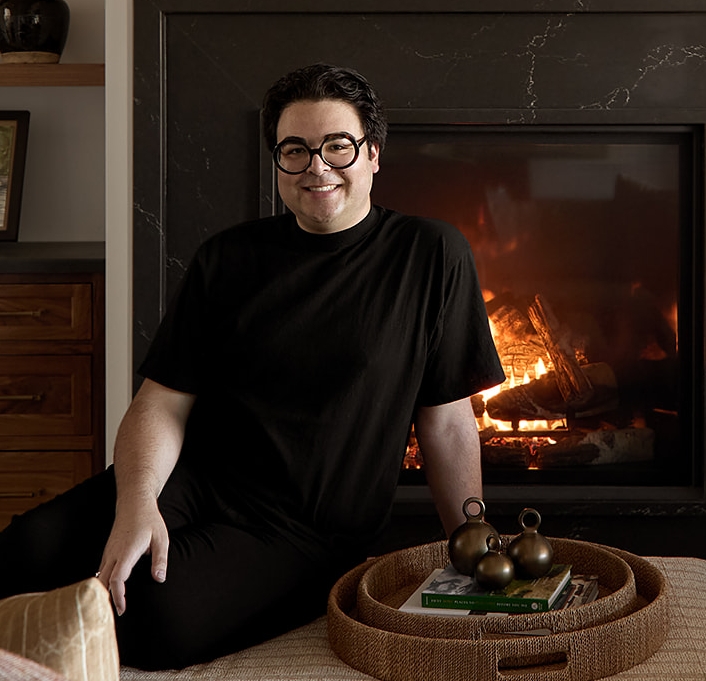
In a recent issue of Cambria Style magazine, we featured a luxury vacation home by Ethan Charles Design located in the Idaho mountains near Coeur d’Alene. We asked designer Ethan Greenfeld about his creative process, design philosophy, and approach to shaping spaces from initial concept through completion.
What does your process look like in the early stages of a project, and how do you begin to “reimagine” a client’s life at home?
The first conversation isn’t really about design; it’s about their life. We’re trying to understand how clients live in their homes—what works, what doesn’t, and what they’ve stopped noticing. Most people come to us knowing they want something to feel different; we just need to find out what exactly that is.
For a vacation home or second residence, the premise shifts. Clients tend to be more adventurous because they aren’t thinking about it as part of their daily lives but from a more relaxed perspective.


With a background in psychology, you bring a unique lens to design. How does that perspective shape the way you listen to clients and translate their needs into physical space?
Psychology taught me that what people say and what they mean are not always the same thing, and somewhere in between lies the “need.” When a client says they want or don’t want something, we always ask “why?”. If we can understand that, we move more seamlessly through their project. The “why” is what we’re designing for.
How do you approach layering materials and details so a space feels complete yet never overdesigned?
I think about it in terms of what deserves attention and what should just work. Every room has one or two moments meant to be noticed, and everything else supports them without competing. The idea is to view a space as a whole. That doesn’t mean you don’t have a “hero” item, but the hero shouldn’t be so “in your face” that you don’t notice anything else. When a space feels overdesigned, it’s usually because too many things are asking for the same amount of attention at once.
When specifying a brand like Cambria for a project, what qualities are essential to you?
Quality and consistency, first. We need to know that what we’re specifying will perform as intended and that the client won’t face problems two years later. That’s nonnegotiable. The second is customer service—we favor the brands that are easier to work with and truly stand behind their product line.
How do the brands you choose to work with ultimately shape the integrity of a final design?
A design is only as good as what it’s built from. We can create a beautiful vision and have it torn apart entirely by a product that doesn’t deliver—color inconsistency, poor craftsmanship, something that reads inexpensive in person. The brands I return to are the ones I trust to hold the standard of the work. At the end of the day, my name is attached to every finish and fixture we specify.
What’s something clients think they want, but do they really?
People think minimalism means empty. It doesn’t. Real minimalism has no layering to fall back on, no styling to cover a weak decision. What most clients actually want when they say “minimalist” is less stuff, which is just editing—a different project entirely. If a client genuinely wants to commit to minimalism, the first thing we tell them is that it requires more decisions, not fewer.

Ethan's L.A. kitchen project featured in Cambria Style issue 26. Cambria design shown: Ironsbridge®
A design detail no one notices until it’s wrong?
Outlet and light switch placement. When it’s right, it’s invisible and functional. When it’s wrong, it’s an outlet three feet off the ground in perfect eyesight, or a light switch you have to walk around an open door to operate. We’re probably more particular about it than most.
What’s your most controversial design opinion?
Designers who won’t push back on a client aren’t doing their job. Taste and vision are a huge part of what we’re hired for. A client can have an idea that sounds right in isolation but would throw the entire energy of a space off. Our job is to hold the whole picture while they’re focused on one piece of it. The designers who do their best work have a point of view and stand behind it, even when it requires a hard conversation. That’s what a client is really hiring us for.
A recent “risk” you took that paid off?
The biggest risk for our latest Idaho project was actually restraint. With a home in such a dramatic natural setting, there’s always the temptation to overdo it. We resisted and let the architecture, materials, and landscape lead. The result is a home that feels refined yet warm, grounded, and connected to nature.
Discover More
Get our beautifully curated collection of lifestyle stories, interior design trends, and expert advice sent straight to your home and email inbox with a complimentary subscription to Cambria Style magazine.
Ready to explore Cambria quartz designs in person? Contact a Cambria consultant or use our retail locator to find a professional in your area for project support and planning, material selection, or visualizing what’s possible.
Explore the #MyCambria Gallery to see how others transformed their spaces and follow us on social media.


